


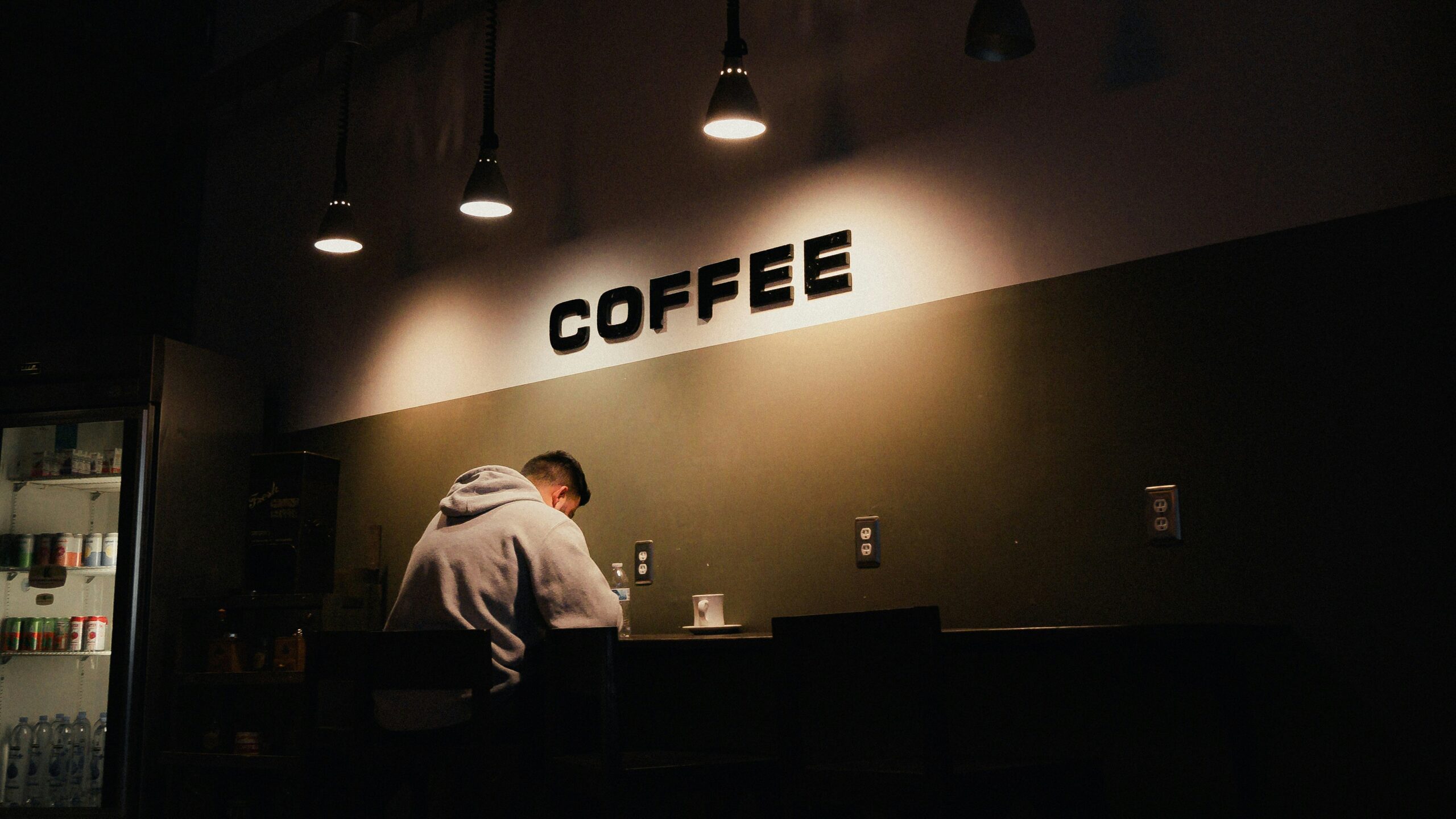
You’ve probably noticed it. You sit down at a coffee shop with your laptop, and within 20 minutes you’ve done more than you managed all morning at home. It feels almost unfair.
This isn’t a placebo. There’s a measurable reason coffee shops work, and once you understand it, you can recreate it.
It’s not the coffee (mostly)
Caffeine helps, sure. But the more interesting variable is the environment itself. Research from the University of Illinois found that a moderate level of ambient noise — around 70 decibels, roughly what you’d hear in a busy café — significantly boosts creative task performance compared to quiet environments.
The noise creates what researchers call a “distraction” that paradoxically improves abstract thinking. Your brain is slightly occupied by the ambient stimulation, which prevents it from generating its own internal distractions (rumination, to-do spiraling, mind-wandering).
The specific elements that make a café work
Not all background noise does this. A coffee shop has a specific texture:
Indistinct speech — voices you can hear but can’t understand. Your language centers register human presence without trying to parse words.
Non-periodic sound events — a cup set down, a door opening, the espresso machine. Random, low-stakes interruptions that don’t demand attention.
Spatial depth — sound coming from multiple directions and distances. This creates a sense of being inside a living environment rather than a recording.
Social accountability — being seen working makes you more likely to keep working. Even slight public presence triggers this.
Why open offices get this wrong
Open offices are loud but not in the right way. They’re full of intelligible speech — conversations you can accidentally follow, phone calls that pull focus. The noise level is often above 75dB in busy moments. And unlike a coffee shop, you have social obligations that interrupt you.
A coffee shop gives you the noise benefit with none of the social obligation. No one is going to tap you on the shoulder.
Replicating it at home or in a quiet office
The easiest solution is ambient soundscapes recorded at the right level. Seventy Decibels (https://seventydecibels.com) does exactly this — real recordings from cafés, markets, and streets around the world, calibrated to ~70dB.
A few notes on doing this well:
Use speakers, not headphones. Headphones deliver sound directly to your ears and can feel isolating or fatiguing over long sessions. A small speaker in the room more closely replicates the spatial experience of being in an actual café.
Pick a consistent location. Use the same soundscape for the same type of work consistently. Over time, your brain starts to associate it with focus — the sound itself becomes a trigger.
Don’t go louder to “feel more there.” 70dB is the effective range. Pushing past 75–80dB starts degrading performance, not improving it.
The remote work angle
For remote workers, the coffee shop effect matters beyond just productivity. Ambient social sound reduces the isolation that comes from working alone. You’re not just getting noise — you’re getting a small, background sense of human presence that matters more than most people admit.
If you’ve been grinding at home in silence and wondering why your output feels flat, the room might be the problem.
Try it: seventydecibels.com → (https://seventydecibels.com)